 METRO PESTSERVICES MELBOURNE
Not sure what you have? Describe it and we will tell you.
Rodents and wildlife
Termites and timber
Stinging insects
Crawling and flying
Property programs

Ant Control Melbourne | Ant Exterminator and Ant Removal
Ant trails in the kitchen? Our ant control Melbourne team finds the nest and treats the colony, not just the trail. Call 0401 573 777 for a free quote.
How do you get rid of ants for good?
Reviewed by the Metro Pest Services team, updated September 2026
You get rid of ants by treating the colony, not the ants you can see. That means naming the species, placing a bait it will actually eat along the trail, and leaving the workers to carry it back to the queens. Spraying the trail kills a few hundred workers and leaves the colony to replace them within days.
Most ants in Melbourne homes are Argentine ants, black house ants or coastal brown ants. They look alike at a glance, but one wants sugar, another wants protein, and the most common of them splits into new colonies when it is sprayed.
Ants are not a sign of a dirty home. They follow moisture and food smells, and dry weather or heavy rain will push them indoors in the cleanest house on the street.
| Ant treatment | from $149, single species |
|---|---|
| Full property ant treatment | from $249, inside and out |
| Usual result | Activity drops within one to two weeks |
| Most common ant | Argentine ant, many queens per colony |
| Busiest months | Spring and summer, and after heavy rain |
| Spraying trails | Splits some colonies, so we avoid it |
| Winged ants inside | Have them identified, termites look similar |
| Food premises | After hours treatment with records |
Argentine ants Melbourne homes see most, and the other common ants
The species decides the treatment. These are the ants we treat most often, and what each one needs.
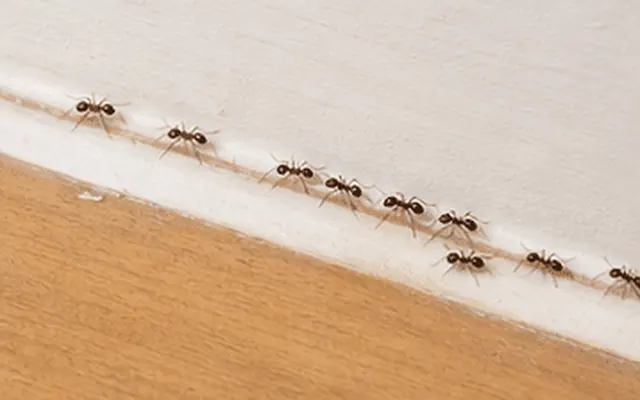
Argentine ant
Linepithema humile- Looks like
- Small, about 2 to 3 mm, light to dark brown, moving fast in thick, busy trails.
- Behaviour
- Many queens per nest, and colonies link across whole streets. Spraying makes them split and spread.
- Treatment
- Sweet, slow acting bait along the trail, with no spray on the trail itself.
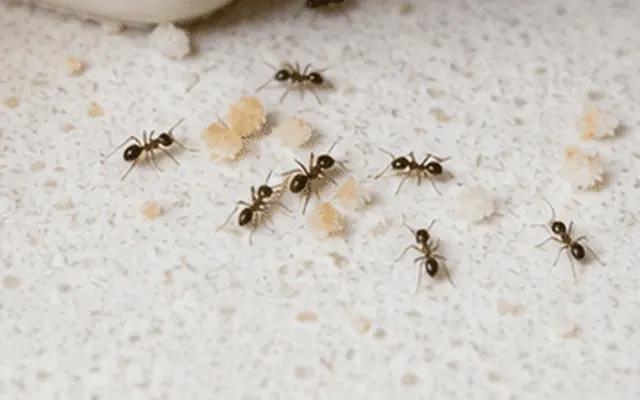
Black house ant
Ochetellus glaber- Looks like
- Small, shiny and black, about 2.5 to 3 mm.
- Behaviour
- Nests in wall cavities, window frames and pot plants, and loves sugar on benches.
- Treatment
- Gel bait at entry points, plus dust into the cavity where the nest can be found.
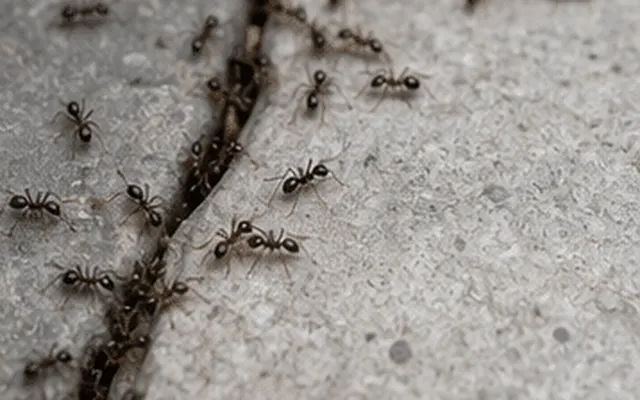
Coastal brown ant
Pheidole megacephala- Looks like
- Small and brown, with larger headed soldier ants among the workers.
- Behaviour
- Nests under paving and slabs, pushing up sand, and prefers protein and fat.
- Treatment
- Protein based bait or granules along paving joints and slab edges.
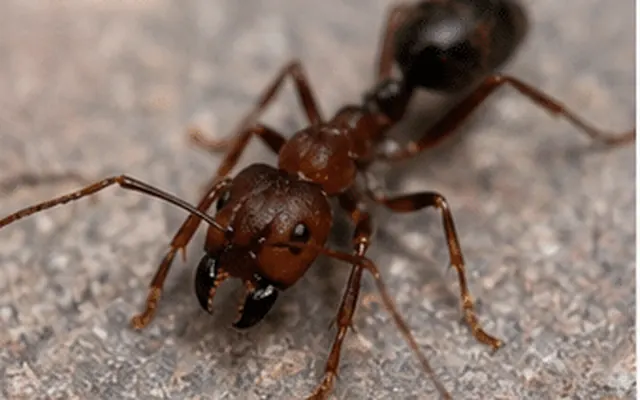
Bull ant
Myrmecia species- Looks like
- Large, up to about 25 mm, with long jaws and often red and black colouring.
- Behaviour
- Nests in soil near bushland edges and defends it with a painful sting.
- Treatment
- Direct nest treatment when a nest sits near paths, play areas or doors.
Four ant mistakes that make the colony bigger
The natural reaction to ants is to wipe out the trail. With the most common Melbourne ants, that reaction is exactly what keeps them coming back.
- 1Spraying the trail with surface spray. Argentine ants respond by splitting into more nests around the house.
- 2Putting spray and bait out together. Spray keeps ants off the bait, so the colony never takes it home.
- 3Wiping ants off the bait. Ants gathering on the bait are the treatment working, so leave them alone for a few days.
- 4Pouring boiling water or bleach into paving. It kills the top of the nest and moves the colony a few metres along.
Signs of an ant infestation Melbourne homes should not ignore
A few ants on a hot day is normal. These are the signs that there is an established colony living in or right against the house.
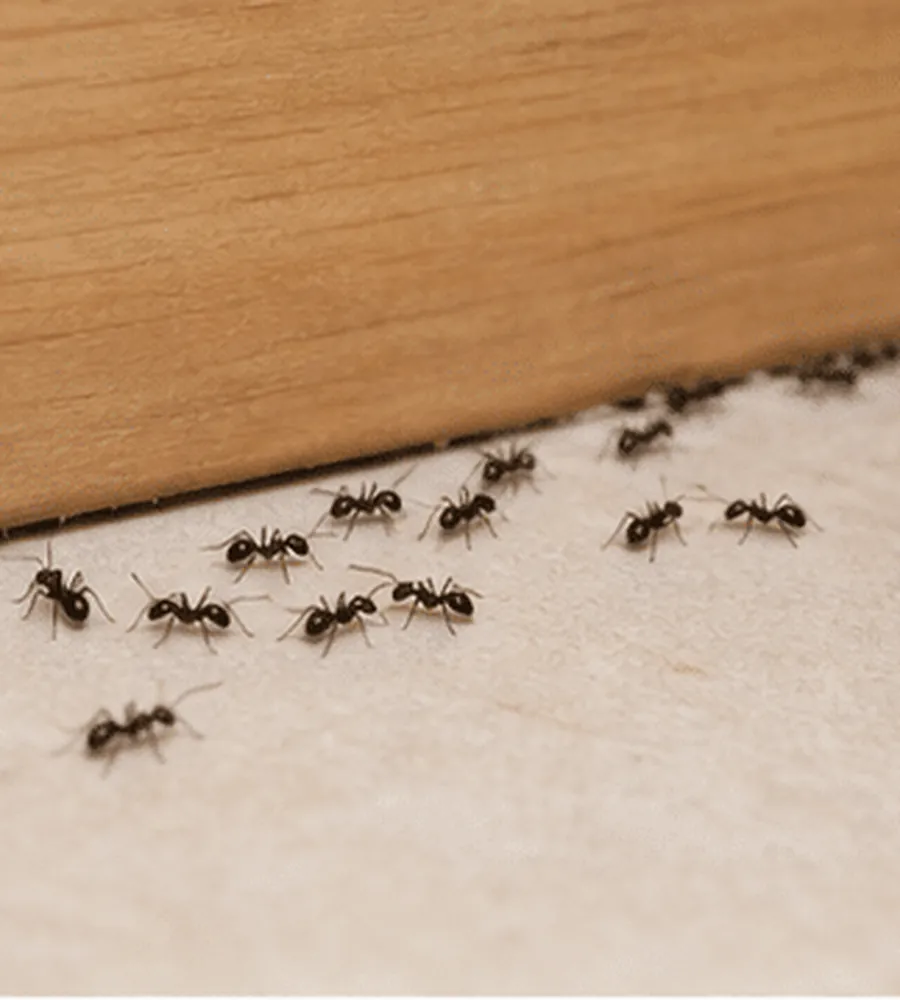
The same trail every day
Ants following one line along skirting, benches or window frames, day after day.
Soil pushed up between pavers
Small piles of sand or soil in paving joints and along slab edges, the mark of coastal brown ants.
Ants in power points
Ants coming out of switches, power points or light fittings, a sign of nesting in wall cavities.
Winged ants indoors
Swarms of winged ants inside. Have them identified, because flying termites look very similar.
Fine sawdust near timber
Small piles of fine, sawdust like material near damp timber, which can point to carpenter ants.
Ants in pet bowls and the pantry
Ants reaching sealed pantry shelves and pet food, a sign the colony is large and close.
Why ant removal Melbourne homes need starts with the colony
An ant you can see is a worker. The queens that keep replacing it stay in the nest, so the nest is where the treatment has to end up.
Ant baiting
Slow acting bait matched to what the species eats. Workers feed on it and share it through the colony, reaching queens we will never see.
Non repellent perimeter treatment
A treatment around the outside of the house that ants cannot detect, so they walk through it and carry it back instead of finding another way in.
Direct nest treatment
Dust or granules placed straight into a nest when we can find it, in paving joints, wall cavities, garden beds or under slabs.
How our ant exterminator Melbourne service works
One visit for most homes, with a check on the result built in.
Name the species
We identify the ant first, because sugar feeding and protein feeding ants need different baits.
Map the trails
We follow trails inside and out to entry points, nests, wall cavities and paving joints.
Treat the colony
Species matched bait, non repellent perimeter treatment and direct nest treatment where nests are found.
Check the result
Activity usually drops within one to two weeks. If it has not, we come back under the warranty.
Carpenter ants Melbourne: are they damaging your timber?
Carpenter ants Melbourne homes find are usually banded sugar ants, a large native ant with an orange band on the body. They are active at night, nest in soil, wall voids and timber that is already damp or rotting, and do not tunnel through sound, dry timber the way termites eat it.
Finding them in timber is still worth a look, because the real problem is often the moisture that softened the wood. And when winged ants appear inside, it is important to confirm they are ants and not flying termites.
- Check for leaks, damp sub floors and timber in contact with soil
- Keep winged insects in a sealed jar or take a clear photo for identification
- Book a termite inspection if the insects turn out to be termites
- Treat the nest once it is found, not only the ants on the surface
Ant treatment cost in Melbourne
These are our starting prices. The final price depends on the species, the number of nests and the size of the property, and it is fixed in writing before we start.
Ant treatment
from$149
- One ant species treated
- Species matched baiting inside
- Entry points treated
Full property ant treatment
from$249
- Inside and outside the home
- Non repellent perimeter treatment
- Paving and nest treatment
- Written warranty
Also quoted on inspection
- Multiple species or nests priced after we see the property
- Cafes and food premises after hours, with treatment records
- Ants plus spiders and cockroaches see general pest control from $189
For comparison, most Melbourne companies quote ant control from about $179 for a standard house, with full property treatments from about $250.
- Covers
- The species we treated
- Area
- Inside and around the home
- If ants return
- Treated again at no charge
- Depends on
- Baits left in place, no trail spraying
Metro Pest Services · Melbourne
An ant warranty that tells you what it covers
If the ants we treated return to the treated areas within the warranty period on a full property treatment, we come back and treat again at no charge.
The warranty depends on baits being left in place, trails not being sprayed with supermarket products, and it covers the species we treated, not a new species moving in from a neighbouring garden.
- Warranty terms written on your job record
- Free re treatment if treated ants return
- Conditions listed plainly, not in fine print
What we tell every customer with an ant problem
More ants for a few days is a good sign
After baiting, ants often gather in bigger numbers around the bait for a few days. That is the colony taking it home.
You will probably always see the odd ant
Colonies in neighbouring gardens do not stop at the fence. The aim is no trails and no nests in or against the house.
A cheap spray visit costs more later
Spraying Argentine ants splits the colony, and the next ant exterminator is treating three nests instead of one.
Pest control ants Melbourne cafes, kitchens and offices can rely on
Ants in a food business are a hygiene problem as much as a nuisance, so the treatment has to work around service and leave a record.
Cafes and food premises
Treatment after hours, bait placed in stations out of reach of food and staff, and a written record for your food safety file.
Offices and shared buildings
Kitchenettes, bathrooms and ceiling cavities treated so staff are not disturbed, with follow up checks booked in.
Strata and apartment blocks
Colonies move between units through shared walls and gardens, so we treat common areas and affected units together.
How to keep ants out after treatment
Ants come in for food and water. Take those away and close the way in, and colonies nearby stay outside.
Wipe benches and sweep crumbs daily, especially near toasters and pet bowls.
Keep sugar, honey, cereal and pet food in sealed containers.
Fix dripping taps and leaks under sinks, which draw ants in dry weather.
Trim plants and branches that touch the walls, roof or windows.
Seal gaps along skirting boards, window frames and around pipes.
Ant treatment across all of Melbourne
Every Melbourne suburb has ants, but the species changes with the soil, the garden and how close the bush is. We treat anywhere in the metropolitan area, with no call-out fee.
Inner Melbourne
- Melbourne CBD
- Carlton
- Fitzroy
- Richmond
- South Yarra
- St Kilda
- Collingwood
- Docklands
Northern suburbs
- Brunswick
- Coburg
- Preston
- Reservoir
- Epping
- Craigieburn
- Bundoora
- Heidelberg
Eastern suburbs
- Box Hill
- Doncaster
- Ringwood
- Glen Waverley
- Blackburn
- Croydon
- Boronia
- Lilydale
South east
- Dandenong
- Clayton
- Cranbourne
- Narre Warren
- Berwick
- Pakenham
- Springvale
- Keysborough
Bayside and south
- Brighton
- Sandringham
- Cheltenham
- Mentone
- Mordialloc
- Frankston
- Seaford
- Carrum Downs
Western suburbs
- Footscray
- Sunshine
- Altona
- Point Cook
- Werribee
- Hoppers Crossing
- Tarneit
- Melton
Established eastern and inner suburbs. Mature gardens and older homes are where Argentine ant supercolonies build up across whole streets.
Bayside and sandy soil suburbs. Sandy soil suits coastal brown ants, which push sand up through paving and along slab edges.
New estates in the west and north. Disturbed soil and fresh landscaping bring black house ants into new homes within the first few years.
Hills and bushland edges. Homes near bush and reserves see more bull ants and large native ants around paths and play areas.
Ant Control Melbourne FAQs
Not sure what ant you have? Send a clear photo of one ant and where you found it, and we will tell you what it is.
Call 0401 573 777How much does ant control cost in Melbourne?
With us ant treatment starts from $149 for a single species, and a full property ant treatment starts from $249, covering inside and outside with a written warranty.
How long does ant removal Melbourne homes need take to work?
Most homes see activity drop within one to two weeks, as workers carry the bait back to the colony. You may see more ants around the bait for the first few days.
Why do ants come back after I spray them?
Surface spray kills the workers on the trail but not the queens in the nest. With Argentine ants, spraying also makes the colony split into more nests.
How do I get rid of Argentine ants in Melbourne?
Use slow acting sweet bait along the trail, stop spraying, and treat the perimeter with a non repellent product so ants carry it back to the many queens in the colony.
Are carpenter ants in Melbourne a threat to my house?
Carpenter ants Melbourne homes see are usually banded sugar ants. They nest in damp or rotting timber and wall voids but do not eat sound timber like termites, so the moisture problem matters most.
Are white ants the same as ants?
No. White ants is the common name for termites, which eat timber and need a termite inspection. Ants and termites also look different when winged.
When should I call an ant exterminator Melbourne wide?
Call when trails keep returning, ants come out of power points or walls, soil keeps appearing between pavers, or bull ants are nesting near paths and doors.
What is the best ant treatment for ants in paving?
Coastal brown ants nest under paving and slabs, so protein based bait or granules along the joints work better than spraying the surface.
Do you treat an ant infestation in a cafe or restaurant?
Yes. We treat food premises after hours, place bait in stations away from food and staff, and give you a written record for your food safety file.
Can I stay home during ant treatment?
Yes. Pets and children should stay off treated outdoor areas until they are dry, and baits are placed out of reach. We tell you exactly how long on the day.
What should I do before the ant treatment visit?
Stop spraying the trails, leave the ants where they are so we can follow them, and clear access to under sinks and around the outside walls.
Is a bull ant sting dangerous?
Bull ant stings are very painful, and some people have serious allergic reactions. Anyone with a known allergy or trouble breathing after a sting should get medical help straight away.
Do you offer same day ant control Melbourne wide?
Often, yes. Call before 2pm and we can usually treat the same day or the next day, depending on your suburb.
Ants back on the bench this morning?
Ant treatment from $149, species matched baiting that reaches the colony, and a written warranty on full property treatments.